ES
ES  IT
IT 
 ES
ES  IT
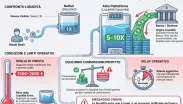
IT Some betting exchange platforms show liquidity 5 to 10 times higher than Betfair's. This liquidity is not real. It is generated via software by drawing liquidity from Betfair's markets and multiplying the values. The platform operator acts as a disguised bookmaker. When a user starts winning, the multiplier is removed and the liquidity returns to what users themselves have entered.
In summary
- Betfair is the world benchmark for liquidity in the betting exchange.
- No platform genuinely has 10 times Betfair's liquidity.
- Inflated liquidity comes from a process called draining and a software-inserted multiplier.
- The operator becomes a hidden counterparty, known as the Bookmaker-style layer.
- Winners get profiled and brought back to real liquidity.
- The extra latency makes scalping and fast trading impractical.
What is liquidity in the betting exchange
Liquidity is the money available on a market at any given moment. In the betting exchange it is the sum of the offers exposed in the Back and Lay columns. The more liquidity there is, the easier it is to match an order. To learn the basics, read the betting exchange guide.
For a trader, real liquidity determines three factors.
- Execution speed. The order is matched immediately.
- Reduced spread. The gap between the Back price and the Lay price is minimal.
- Fast exit. A live position closes quickly without slippage.
Without real counterparties, sports trading doesn't exist. It becomes a bet against the house. And this is exactly why some operators simulate liquidity.
Why some platforms show 5-10 times Betfair's liquidity
The answer is administrative in nature. These platforms don't have enough real users to have this much liquidity. Bots "copy the markets of the main exchanges" and multiply the volumes by a coefficient. The user sees substantial liquidity that isn't real but fictitious. The process unfolds in three phases.
Phase 1: liquidity draining
A bot reads Betfair, Smarkets, Betdaq, or Matchbook markets in real time. It copies odds and amounts and republishes them in its own internal order book. This activity is called draining or liquidity scraping.
Phase 2: software multiplier
A coefficient is applied to the volumes copied into the software: 3x, 5x, or 10x. The figure displayed to the user does not correspond to real liquidity.
| Real liquidity on Betfair | Multiplier | Liquidity shown to the user | Liquidity supplied by the platform / Bookmaker-style layer |
|---|---|---|---|
| €1,000 | 3x | €3,000 | €2,000 |
| €1,000 | 5x | €5,000 | €4,000 |
| €1,000 | 10x | €10,000 | €9,000 |
The difference between the €10,000 shown and the real €1,000 doesn't exist on the market. If a user bets it, it's the operator who covers this missing liquidity. In effect, it becomes a bookmaker whose interests are opposite to those of the customer.
Phase 3: the operator becomes "Bookmaker-style layer"
On the excess liquidity, the operator takes on the risk itself. It behaves like a traditional bookmaker. In industry jargon this role is called Bookmaker-style layer. The platform stops being a neutral intermediary. It becomes a counterparty with interests opposite to those of the sports trader.
Key point
A genuine exchange earns only from commissions on winnings: it has no interest in making you lose. A synthetic exchange earns when you lose on the excess liquidity. The conflict of interest is evident and distorts the very concept of a betting exchange.
What happens when you start winning: profiling
The operator constantly monitors its own market exposure. Every win the trader makes on synthetic liquidity is a direct loss for the Bookmaker-style layer. This is why tolerance thresholds are set on the customer's profits.
- Customer acquisition phase. The user sees huge liquidity and deposits capital.
- Monitoring phase. The system tracks net profits and commissions generated by the customer.
- Alarm threshold. Between €1,500 and €2,000 of net profit (depending on the platform) triggers profiling.
- Multiplier removal. The user goes back to seeing only Betfair's real liquidity. No warning is given.
- Automatic hedging. Every trade the winning customer places is replicated on Betfair. The operator zeroes out its risk and only pockets the commission difference.
Unlike a bookmaker, the synthetic exchange rarely closes the account but applies a silent downgrade instead. The user keeps operating, but without any advantage over trading directly on Betfair.
The relationship between commissions and profits
The tolerance threshold isn't fixed. It depends on the ratio between the user's net profits and the commissions generated. Those who generate a lot of commissions see their stay in the system prolonged.
| Trader profile | Turnover | Commissions generated | Net profit | Outcome |
|---|---|---|---|---|
| High-frequency trader / bot | Very high | High | Fluctuating (+€6,000 / -€5,000) | Tolerated, threshold raised |
| Trader with few trades and winning | Low | Minimal | +€2,000 with few trades | Downgraded immediately |
The Bookmaker-style layer accepts the risk as long as commissions cover the payouts on the multiplied liquidity. Those who win with few trades are penalized more because they pay few commissions. To understand how commissions affect your returns, see the page on betting exchange commissions.
Increased live delay
Draining is not instantaneous. The bot has to read the data from Betfair, apply the multiplier, and republish the odds. This process adds a delay often of around 1 second, compared to the Betfair standard.
The trader experiences a greater delay in live markets, which is more noticeable when scalping. With professional trading software this delay is even more evident since it's visible on the ladder.
Asian brokers and aggregators like Mollybet
Not all platforms showing liquidity higher than Betfair's are synthetic. There's a different category: Asian betting brokers. The best known are BetInAsia and Sportmarket. Both operate through the Mollybet platform, an aggregator that connects Asian bookmakers and exchanges on a single screen.
Here, the elevated liquidity is the sum of multiple real sources.
How a liquidity aggregator works
Mollybet queries several operators in real time. For each market it shows the odds and the amount available at each source. The "All Bookies" row adds it all up. The trader sees where every euro comes from.
A real example on the Asian Over 2/2.5 market for Cagliari-Lecce:
| Feature | Real exchange (Betfair) | Aggregator broker (Mollybet) | Synthetic exchange |
|---|---|---|---|
| Source of liquidity | Real peer-to-peer users | Sum of multiple real operators | Copied from Betfair and multiplied |
| Visible origin | Yes, single source | Yes, source by source | No |
| Operator's role | Neutral intermediary | Routing intermediary | Counterparty (Bookmaker-style layer) |
| Revenue source | Commissions on winnings | Commission on turnover | User losses + commissions |
| Treatment of winners | No restrictions | No restrictions from the broker | Multiplier removal, hedging |
| Latency | Standard | Depends on the source | +1 second approx. |
| License | Yes (Betfair.com) | No | No |
The total far exceeds Betfair's liquidity on the same market. But every figure is attributed to a real operator. When the trader places an order, the broker routes it to the source that actually has that price and that amount. There is no multiplier.
The difference with Bookmaker-style layer
The synthetic exchange copies Betfair, multiplies the amounts, and covers the invented portion itself. The Asian broker aggregates sources without inventing anything. It sums the liquidity of multiple independent operators and shows it source by source. Market risk stays with each individual bookmaker or exchange, not with the broker. The broker earns from a commission on turnover, not from the customer's losses.
Why per-source transparency is the decisive criterion
The signal that distinguishes an aggregator from a synthetic exchange is traceability. On the aggregator, every amount has a name next to it: Pinnacle, Betfair, Betdaq. On the synthetic exchange there's just one number, with no origin. If you can't tell where the liquidity comes from, chances are it doesn't exist.
Behavior towards winners is also different. A broker has no reason to close the account of someone who wins. If a connected bookmaker restricts an account, the trader keeps operating on the other sources. The broker's Back and Lay prices may be slightly worse than those of the direct source, because they include the service margin. This is the only real cost.
Regulatory note
BetInAsia, Sportmarket, and the Mollybet platform are not licensed bookmaker. They are not legally accessible to residents of many Countries. See your legislation before open an account.
Real liquidity vs. synthetic liquidity: comparison
| Feature | Real exchange (e.g. Betfair) | Synthetic exchange |
|---|---|---|
| Source of liquidity | Real peer-to-peer users | Copied from Betfair and multiplied |
| Operator's role | Neutral intermediary | Counterparty (Bookmaker-style layer) |
| Revenue source | Commissions on winnings | User losses + commissions |
| Latency | Standard market rate | +1 second approx. |
| Treatment of winners | No restrictions | Multiplier removal, hedging |
| Guarantee on funds | Competent regulator | None |
| Scalping and HFT | Feasible | Not feasible professionally |
How to spot a platform with artificial liquidity
How to check whether an exchange platform has artificial liquidity.
Signals to check
- The liquidity shown is far higher than Betfair's on the same market.
- The exposed amounts are exact multiples of those present on Betfair.
- After a series of wins, liquidity on the books suddenly shrinks.
- The license cannot be verified, or the operator has no stated physical address.
- The contact information has no registered office, administrative address, or phone number.
- The terms allow the operator to limit or cancel winnings at its discretion.
Where to trade safely
Liquidity is the only objective metric for trading on an exchange. Any platform promising 10 times Betfair's liquidity is, by definition, a synthetic counterparty.
International market
Betfair.com, Smarkets, Betdaq, Matchbook. Only for those residing in jurisdictions where access is authorized.
Operating rule
Be wary of shortcuts. Always check the license, registered office, and terms. Protect your capital with strict money management.
In the peer-to-peer market, you don't win with software multipliers. You win with skill, execution speed, and capital protection.
Video guide on platforms with artificial liquidity
In the video below, using an infographic, I explain how betting exchange platforms with artificial liquidity work.
Frequently asked questions about artificial liquidity
Here are the recurring questions about exchange platforms with real and synthetic liquidity.
Why do some platforms show more liquidity than Betfair?
Because they copy Betfair's markets with a bot and multiply the amounts via software. The excess liquidity isn't real. It's covered by the operator, who acts as a bookmaker.
What is draining in the betting exchange?
Draining is the process by which a bot reads odds and amounts from a major exchange and republishes them on a secondary platform. It's the technical basis of synthetic liquidity.
What does Bookmaker-style layer mean?
Bookmaker-style layer is the term used to describe the operator that takes on the risk of the multiplied liquidity. It isn't an intermediary. It's a direct counterparty to the trader.
What happens if I win on an exchange with artificial liquidity?
Once a profit threshold is exceeded, generally between €1,500 and €2,000, the multiplier is removed. You go back to seeing only Betfair's real liquidity. Your trades are automatically replicated on Betfair.
Is artificial liquidity illegal?
It depends on the jurisdiction and the license. The main issue isn't legality but the lack of protections. Without a competent regulator, there's no guarantee of getting your funds back.
Can I scalp on a synthetic exchange?
Yes, but with greater risk. Draining adds about 1 second of delay compared to Betfair. Scalping and high-frequency trading require real-time data.
Why is a trader using a bot tolerated for longer?
Because it generates a lot of commissions. The operator accepts the risk as long as the commissions collected statistically cover the winnings on the multiplied liquidity.
Which exchanges have real liquidity?
Internationally, Betfair.com, Smarkets, Betdaq, and Matchbook, in countries where they are authorized.
How do I check if a platform's liquidity is real?
Compare the same market with Betfair. If the amounts are exact multiples and update with a delay, the liquidity is copied and multiplied.
Do Mollybet and Asian brokers use artificial liquidity?
No. Mollybet is an aggregator. It sums the real liquidity of multiple bookmakers and exchanges and shows it source by source. Every order is routed to the operator offering that price.
What's the difference between an aggregator and a synthetic exchange?
The aggregator sums real liquidity from different operators and shows the origin of every amount. The synthetic exchange multiplies Betfair's liquidity via software and covers the invented portion itself, acting as Bookmaker-style layer.

Gianluca Landi
Professional Sports Trader | Founder of ScoreTrend
Sports trader since 2007 and online with the first sports trading site and courses since 2011. Engineer specialized in data analysis and betting exchange strategies. Amazon bestselling author and founder of ScoreTrend, the leading platform for match trading and betting with proprietary indicators such as xTrend, Goal Trend, SOD, and Draw Balance.